Detached Garage Builder in Willow Creek, MT
A small unincorporated town on a bench above the Jefferson, on cobble gravel that gives good bearing and hard digging. Twelve inches of annual precipitation makes this the driest ground we work on.
No obligation. Every estimate starts with a walkthrough of the lot, the access and where the building can actually sit.
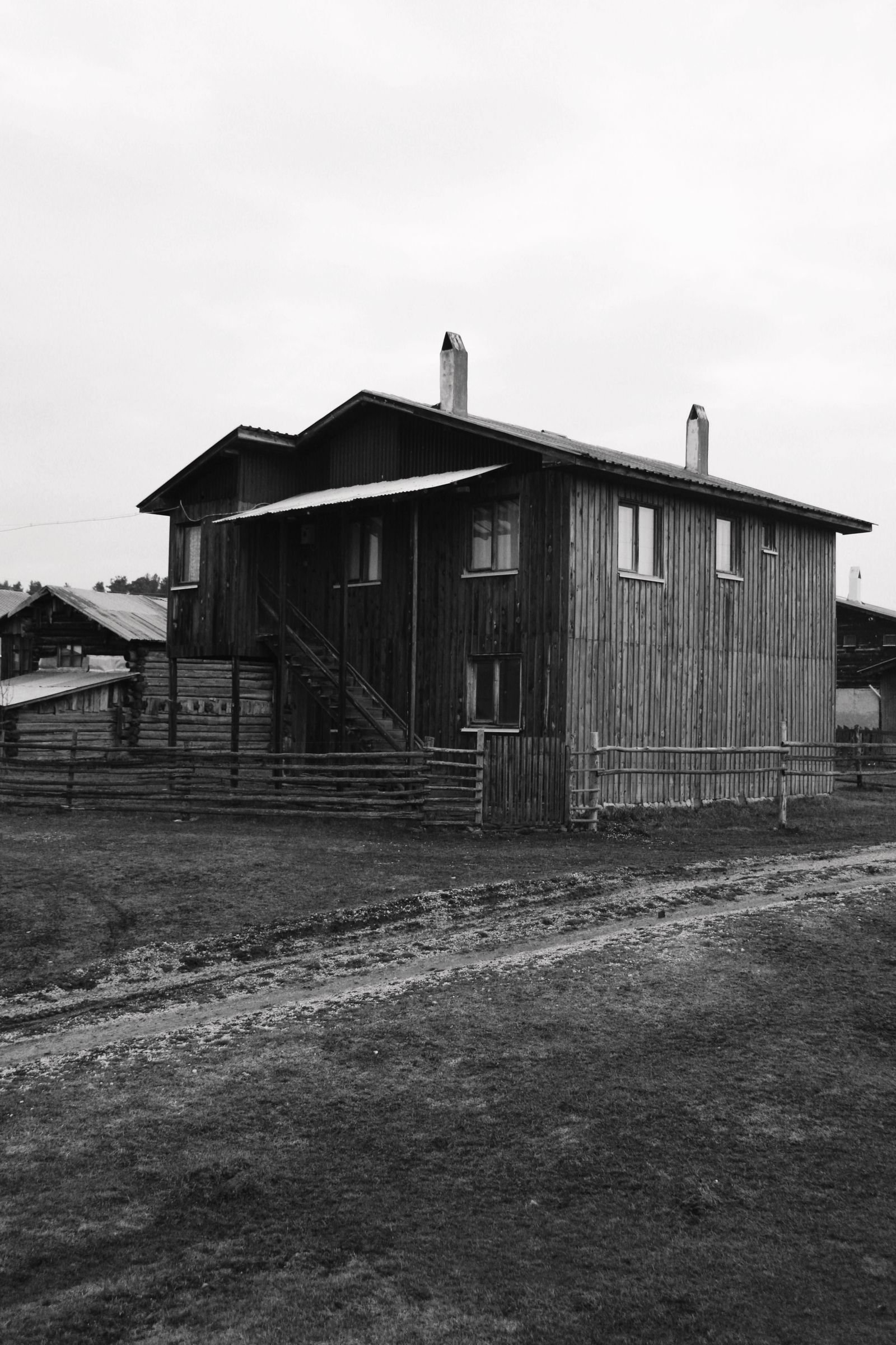 Willow Creek, Montana
Building here
What Willow Creek is actually like to build in
Frost depth follows the City of Bozeman published requirement, which we treat as the regional standard because the ground freezes the same depth on either side of a jurisdiction line.
Willow Creek is a community of about 230 people where the valley of Willow Creek meets the valley of the Jefferson River, roughly six miles southwest of Three Forks with the Tobacco Roots to the west. It is unincorporated and it is small, and there is no point pretending otherwise.
What it does have is distinct ground. The Jefferson valley gravels here are described as angular to rounded matrix-supported cobbles, white quartz, schist and amphibolite, 20 to 40 feet thick. That is excellent bearing material and genuinely hard digging. Expect cobbles and boulders in a footing trench, and expect the excavation line of an estimate to reflect that rather than a valley-loam assumption.
It is also the driest place we build, at about 12 inches of annual precipitation. The irrigation infrastructure is correspondingly dense: the irrigation district formed in 1915 and the Willow Creek dam and spillway were completed in 1936. Ditch easements are a live siting constraint on almost any parcel outside the townsite.
The town was settled in 1864, got the Northern Pacific in 1887 and the Milwaukee Road around 1908, making it a rare two-line town, and the townsite lots were laid out and sold from 1910. The stock is 1900s and 1910s: false-front frame commercial buildings, a 1915 rusticated concrete block church and a 1910s Craftsman school. Small platted lots in town, working farm and ranch acreage with existing barns outside it.
Local conditions
What shapes a garage project in Willow Creek
Cobbles and boulders
Jefferson valley gravel is 20 to 40 feet of matrix-supported cobble. Good bearing, slow excavation. This is the one local factor most likely to move an estimate.
Unincorporated county
Gallatin County Planning for floodplain, the health department for septic. Whether a zoning district covers a parcel here needs confirming, since much of rural western Gallatin County is unzoned.
Ditches, not rivers, on most sites
Twelve inches of annual precipitation and dense irrigation infrastructure since 1915. The Jefferson floodplain is the mapped hazard; ditch easements are the everyday constraint.
What we build
Buildings we put up in and around Willow Creek
Each of these raises a different structural and permit question. The pages below cover what is involved rather than repeating the same paragraph with the building name swapped.
Detached Garages
Two, three and four-car detached garages built on their own footings, sized to the lot and the setbacks rather than to a catalogue.
What is involved →Shops & Workshops
Heated, insulated working buildings with the ceiling height, power and floor drainage that real work needs.
What is involved →RV Garages
Tall-door buildings sized around the vehicle you actually own, with the door height and approach worked out before framing.
What is involved →Garage With Loft
Storage or bonus space over the bays. A different roof, a different stair and a different structure from a single-storey build.
What is involved →Garage Apartment (ADU)
A dwelling above the garage. Different permit path, different code, and the one build here where the rules changed recently.
What is involved →Pole Barn Garages
Post-frame buildings for larger clear spans on acreage, where a stick-framed garage costs more than it needs to.
What is involved →Garage Slabs & Concrete
Footings, frost walls, slabs and aprons. The part of the build that is impossible to fix later.
What is involved →Garage Demolition & Rebuild
Taking down a failing garage and rebuilding on the same footprint, including what to do about the old slab.
What is involved →Before design
The Willow Creek checklist
Five things we establish on a Willow Creek property before drawing anything. Most of them cost nothing to check and a great deal to get wrong.
- Whether the parcel is in the Jefferson River floodplain, which brings county floodplain permitting into play.
- Irrigation ditch easements, which are dense here and easy to miss outside the watering season.
- Cobble content at the building pad, because it affects excavation time and cost more than anywhere else nearby.
- Whether any county zoning district covers the parcel, which decides if a land use permit is required.
- Well and septic locations, since almost everything outside the townsite is on both.
Nothing on this page is a code determination. Codes, fee schedules and zoning change, and Bozeman replaced its entire development code effective 1 February 2026 as a reminder of how fast that happens. We verify every figure against the current regulation for your specific parcel before design, and you should confirm anything you intend to rely on with the authority that administers it.
Questions
Building a garage in Willow Creek
Is a permit needed for a garage in Willow Creek?
Willow Creek is unincorporated, so there is no municipal permit. Gallatin County does not run a certified building code program, and state law exempts a private garage built for the owner's own use from the state building code.
Floodplain and septic permitting still apply where relevant, and if the parcel falls inside a county zoning district a land use permit is required. Much of rural western Gallatin County is unzoned, but that is worth confirming rather than assuming.
Will the cobbles make the foundation more expensive?
Usually the excavation rather than the concrete. Digging a 36 inch trench through matrix-supported cobble takes longer, sometimes needs a bigger machine, and occasionally turns up boulders that have to be dealt with.
The upside is that once you are down, the bearing is excellent. We price excavation here with the ground in mind rather than applying a valley-floor rate.
What snow load applies at Willow Creek?
At 4,173 feet this is low ground, comparable to Manhattan at 4,232 feet, which reads 20.7 psf in the Montana snow load study. That is among the lightest in the region.
It is a station value rather than an adopted design load, so we still pull a figure for the site coordinates. But a Willow Creek roof is generally a lighter truss package than a Bozeman one.
Are the irrigation ditches really a problem?
They are the most common siting constraint on acreage here. The irrigation district dates to 1915 and the infrastructure is dense, with easements that carry setback requirements and maintenance access rights.
A ditch that is dry when you walk the property in early spring carries water from April. Map all of them before choosing a building location.
Is it worth building a large shop this far out?
People do, and post-frame is often the sensible answer on acreage where the building is a working shop rather than an extension of the house. See pole barn garages.
Distance affects scheduling more than it affects the building. Where it changes the number we say so before you have spent anything.
Nearby
Other areas we cover
Next step
Get a range for your Willow Creek property
Send the address and a rough idea of the building. We come back with what the ground and the jurisdiction allow, and what it is likely to cost.